

About Us
The Spartan Housing Cooperative (SHC) is a non-profit, autonomous organization providing an affordable off-campus housing option to students and the Greater Lansing community. There are more than 240 members in our 17 houses. Houses vary from 5 to 29 members, each with their own character and history. Our name honors our historical affiliation with Michigan State University, where we remain a registered student organization. However, we operate independently from the university with additional requirements and guidelines for membership.
SHC is committed to providing safe, secure and affordable housing. We offer a number of different housing options across the Greater Lansing region.
- Open membership such that no members of any age, color, gender, gender identity, disability status, height, marital status, national origin, political persuasion, race, religion, sexual orientation, veteran status, or weight race, creed, color, sex, or sexual preference shall be excluded from applying to and becoming a member
- The Cooperative belongs to its members, thus any holdings of the Cooperative belongs to its members.
- Continuing and constant education & expansion of the cooperative ideal, that through cooperation among cooperatives and their members, cooperatives shall grow and prosper.
If you’re a Michigan State University student looking for nearby campus affordable off-campus housing, that comes with friends, food, and fun, be sure to check out our Campus Co-ops. All campus co-ops are additionally open to non-MSU students.
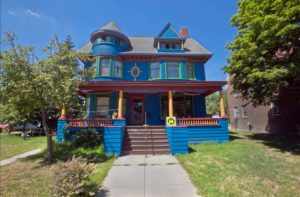
Howland House ~ 415 M.A.C. ~ East Lansing
All of our spaces come furnished with a bed, desk, chair, and dresser or wardrobe upon request. Common areas in houses are also furnished with legacy furniture.
We also have 3 community cooperatives to reside in. Two in Lansing and one in Meridian Township. These homes operate cooperatively and in the same governance structure as the campus coops, historically with less students. A strong activist cultural has been established in these homes.
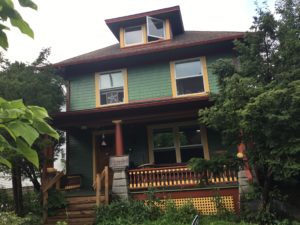
Rivendell ~ 731 W Genesee St ~ Lansing
Member residents own and operate the cooperative. Through the stewardship of being home owners, our spaces are unique infrastructures, full of culture, art and individual but collective histories.
The board of directors operates through a Policy Governance structure, while the SHC staff work closely in tandem with the Executive Committee.
Learn more about the committees here:
Meet your Executive Committee!
President – Erik Berg

Hi all!
I moved into Orion in the Fall of 2018, and I’ve spent January 2019 through May 2020 as a member of the Board, the Governance Revision Committee, and Orion’s House President–aside from a brief stint working on our Education Committee and as an Office Laborer in the Summer of 2019. Nowadays, my main job around here is serving as our co-op’s President. In my free time I like to research cooperative business models, read through cooperative governing documents and history, play my accordion, and write code for software and web apps. Almost immediately after joining the SHC I became very involved with and passionate about our co-op and the cooperative movement as a whole, and I’m really excited about the future of the SHC. Always feel free to reach out to me if you have any questions or just want to talk about co-op stuff.
Vice President of Education – Emily Tyler
 Emily Tyler graduated from Michigan State in the spring of 2019 with a degree in English. She moved into Toad Lane in December of 2017, and has been living at Vesta since August 2018. She served as office laborer for Vesta, as well as education officer, until she was elected Vice President of Education in spring 2020. She loves reading, writing, and spending time with her housemates. After her term as VPE, she plans to attend the University of Chicago to pursue graduate work in English. During her term, she intends to maintain a rad and regular Pine Press, as well as increase engagement of education officers with their houses and engagement of members with the SHC overall.

Vice President of Membership –
Leah Rogers
Hey, I’m Leah! I am a recent MSU graduate with a Bachelor’s Degree in Political Science. I was introduced to the co-ops by my friend Matthew, and moved into Vesta during my junior year. I love being outdoors, reading, and learning to cook new things. I am super excited to be your Vice President of Membership and to get to know you and our co-op better!

Vice President of Facilities – Nikki Phan

Corporate Treasurer – Shyla Crump
Shyla is the new corporate treasurer who enjoys long walks to nowhere and building random spreadsheets. During her term, she will be focused on member education of their finances at a house and SHC level.
Corporate Secretary – Dale Kruithoff
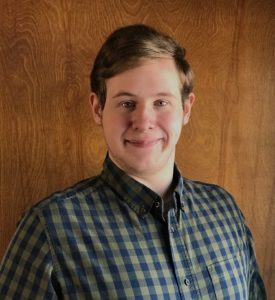
Dale is a senior at MSU pursuing a Bachelor’s Degree in Economics and a minor in Law, Justice, and Public Policy. He found the co-op’s online and moved into Vesta in the summer of 2019, before moving to Howland that fall, where he is currently living. He has been on the SHC Board of Directors for almost two years, serving on the Governance Revision Committee, and then as the SHC’s representative for the Associated Students of Michigan State University. In his time as Corporate Secretary, he hopes to help get the code of operations up to date, ensure transparency and easy access to corporate documents for members, and make the responsibilities of the Corporate Secretary role more defined. After the end of his term, he plans to pursue a career in State or Local Government.
corporatesecretary@spartan.coop


